Mostrando entradas con la etiqueta English. Mostrar todas las entradas
Mostrando entradas con la etiqueta English. Mostrar todas las entradas
30 mar 2013
Energy until 2083
Countries like the United States produce more than 2,000 tons of nuclear waste per year. The best solution to get rid of them, at least so far, is buried in the depths of the earth. However, two scientists from the Massachusetts Institute of Technology (MIT) believe they have found a better way, not only to eliminate nuclear waste, but also to serve as recycling and clean energy source capable of supplying the entire planet until 2083 .

The usual system for producing nuclear energy is that we all know: radioactive rods are inserted into the reactor core and hence the material can be melted is converted into energy. The problem is that this is not very efficient. During the four years of life that has half of these bars, employs only 3% of the radioactive material it contains. The remaining 97% is waste, which is stored in nuclear waste.
These scientists have got to take advantage from all the energy that they keep. The key is in the molten salt reactor (MSR), which use the same material as a coolant or fuel. Such salts have proven heatsinks much more effective than the helium element used on conventional water jets.
Therefore, unlike the light water reactors, an MSR operates at very high temperatures which allow a high thermodynamic efficiency than atmospheric pressure without firing the mechanical stress of the system. By the middle of the 50 was experienced with this type of reactor, but were too big and heavy, so nobody had noticed this.
Now Leslie Dewan and Mark Massie, MIT, have updated the original experiment technology to build a molten salt reactor also reuses waste, both uranium and thorium. The invention, according to its creators, is able to use up to 98% of the radioactive material remaining in discarded bars for energy, and only with 50% and would be an incredible breakthrough.
Each reactor of this type would cost more than 1,150 million euros and would be able to generate 500 megawatts of energy. But contrary to what it may seem, not expensive: a light-water reactor capable of producing only twice the energy costs more than 5,300 million euros.
19 ene 2013
Computer recycling

Electronic rubbish, and computer equipment in particular, is a rapidly
expanding stream of waste. Low prices allow consumers to replace the computers
often, and a rapid technological change means, so it will generate a large amount
of technological waste.
- Why is it important to recycle computer equipment?
Our computer is made up of: plastic (32%), ferrous metals (18%),
non-ferrous metals (12%), electronic boards (15%) and glass (23%).
Such items should on no account be thrown out with your household rubbish
because they contain toxic substances, and are dangerous waste.
- How does it recycle it?
There are differents ways that you can perform for disposal:
-Returning the product to the manufacturer: Increasingly, manufacturers
of electronic goods incorporate the recycle of computers management into their
environmental policies. The manufactures cover the cost of home pick-up,
shipping to the recycling centre, and recycling of any obsolete equipment.
Then, when it arrive to the recycle place, the computers are sorted
according to type or material. Materials like steel and aluminium are then
recycled to make new products, from car parts to plastic toys.
-Taking the item to a professional waste disposal facility:The process is
the same as with a manufacturer scheme, but you may have to pay for collection
and disposal of the waste.
-Donating the goods to a non-profit organisation: A number of non-profit
organisations collect electronic equipment including computers and printers,
either for reuse or for de-manufacture and recycling. Recipients pay nothing
for the equipment or buy it at a heavily discounted rate.
Now, you haven't got any excuse to don't recycle the computers! ;D
18 ene 2013
Plastic recycling symbols
Probably you have already seen some
symbols on plastics, but you don’t know what they mean. Don’t worry; in no time
at all we’re going to explain you.
These are the symbols that you can find:

Maybe they can appear with some changes
like:


The last picture informs us of these
plastics have already been recycled. Because they are written with an R
(recycled) before the acronym.
And after this brief introduction, we
start with the plastics’ classification:
1.
POLYETHYLENE
TEREPHTHALATE (PET and PETG)
This kind of plastic is usually used to
packaging food; bottles of soda, water, beer, mouthwash juice and vegetable oil.
It’s really common because it’s lightweight, cheap, easily recyclable and
strength. Recycling this plastic we can obtain new PET, fabric for clothing,
furniture, car’s parts and more items.
PETG
is a co-polymer of PET and it has a good resistance to impact. It’s used to
contain shampoos, detergents, soaps…


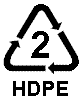
2.
HIGH DENSITY POLYETHYLENE (HDPE)
It’s used for packaging
cleaning or chemical products (such as shampoo, detergent, chlorine, bleach,
etc.) and foods like milk, juice, water or yogurt. It’s also used to make
plastic carrier bags. Its properties are strength, resistance of wetness and
chemicals and permeability to gas. If we recycle it, we can obtain tubes,
detergent bottles, oil bottles, picnic tables, pens, mailbox posts, recycling
containers…

3.
POLYVINYL CHLORIDE (PVC) and VINYL (V)
The main difference between these plastics
is polyvinyl chloride contains chlorine (if it burns, it produces carcinogenic
toxins) and vinyl not, as their names say. We can package cooking oil,
detergent shampoo, etc. It’s also used to make windows, wire and cable
jacketing or piping. Properties: toughness, strength, clarity and resistance.
Unfortunately this plastic isn’t usually recycled but when it’s recycled we can
obtain roadway gutters, paneling, flooring…


4. LOW DENSITY POLYETHYLENE (LDPE)
We can find this plastic in squeezable
bottles, bread bags, frozen food bags, clothes, furniture or carpets. This plastic
is tough, flexible and transparent. After recycling, we obtain trash cans,
compost bins, furniture, panelling, floor tile, etc.


5. POLYPROPYLENE (PP)
This type of plastic is found in yogurt
containers, syrup bottles, medicine bottles or caps. It has resistance to heat
(because it has a high melting-point), is strong and resistant. If we recycle
it, we obtain signal lights, brooms brushes, battery cables, bins or trays.


6. POLYSTYRENE (PS)
This kind of plastic is used to make
plates, cups, compact dick jackets, meat trays or egg cartons. It’s clear, a
good thermal insulation and has low melting-point. Recycling this plastic we
obtain thermal insulation (due to its properties), egg cartons, carry-out
containers, rulers or vents. Nevertheless it’s too difficult recycle it and can produce toxins.


7. OTHER
In this category are included
all plastics not specifically previously or combinations of them. Because of
this, its properties are very varied. We can find this in some plastics
bottles, DVD, sunglasses, food packaging, computers, etc. It’s too difficult to
recycle it owing to its diversity.


30 oct 2012
Radioactive wastes
To throw away all our nuclear wastes to a volcano looks a good and organized solution to get rid of 26.000 tonnes of uranium fuel that are saved around all the world. But there is an indispensable condition that a volcano must have for we could let there all the wastes and this condition is the hot. The lava wouldn’t have only to melt the bars of fuel, in addition it would have to neutralize the uranium radioactivity and unfortunately the volcanos aren’t enough hot.

The hottest lava of a volcano can raise until 1316 ºC. It is not an enough temperature to melt the uranium, the uranium that is usually used in most nuclear plants which melting point is about 2865 ºC. Higher temperatures are needed to break up the uranium atomic nucleus and for its radioactivity will be null. A thermonuclear reaction would take place as one of an atomic bomb, which is not an excellent idea to get rid of nuclear wastes.
In addition, a volcano wouldn’t even
swallow the materials. The liquid lava in a volcano tends to emerge, so the
bars wouldn’t sunk very much. Instead of this, the wastes would stay on the
highest part of the solidified lava of the volcano, at least until the magma
pressure would be so powerful that the volcano would erupt, and that would be a
huge problem.
The lava of a volcano that has been used to
save radioactive wastes would be extremely radioactive. At the end, it would
solidify and the mountains would be covered by nuclear materials during
decades. The ash and the gas in an eruption, can lift until 10 km and then go round
around the terrestre globe several times, and we would have a very serious
dilemma.
29 oct 2012
Traducción/Translation
Español
Si alguien quiere algunos de nuestros artículos en inglés traducidos al español o al francés, no tiene más que dejar un comentario en el artículo e intentaremos subirlo traducido lo antes posible. Esperamos vuestros comentarios.
English
If someone wants some of our articles in Spanish translated into English or French, he can leave a comment on the article and we try to upload translated as soon as we can. We wait for your comments.
23 oct 2012
Four Rs
It is necessary to decrease the amount of waste produced and it is therefore important to be able to follow the rule of four Rs.
- Reduce: Buy only what is necessary, try to bring our own bags, try to avoid wrappers, etc. For example, we can buy books at used book stores, and with this we avoid buying new things to spend natural resources like trees.
- Re-use: Many of the items that end up in the trash can be reused. For example, we can give the clothes we no longer use to other people that need it.
- Recycle: There are some places that make a selective collection and processing elements to give it a new use, in some cases the same for which they were created but with less quality. For example, we can recycle plastic, paper, glass and more things.
- Retrieve: This usually happens with the recovery of raw materials or materials for reuse, and it is most clearly seen in many industrial processes.
3 oct 2012
Presentación/Presentation
Español
¡Hola!
Somos cuatro alumnas de 1º de Bachiller del colegio "La Purísima". Estamos haciendo un proyecto de "Ciencias del Mundo Contemporáneo" (CMC) sobre los residuos y su reciclaje.
¿Nunca te has preguntado dónde acaban los muebles que tiras? ¿Qué se hace con los móviles viejos? ¿O con las bombillas usadas? ¡Sobre todo esto y mucho más hablaremos en nuestro Blog!
Además, subiremos un resumen y una presentación en Power Point sobre la gestión de los residuos en general.
¡Hasta pronto!
English
Hello!
We are four students of 1st of Bachiller from the college "La Purisima". We are doing a project of "Ciencias del Mundo Contemporáneo" (CMC) about wastes and its recycling.
Have you ever asked yourself where the furnitures go? What people do with old mobile phones? Or with used light bulbs? About this and much more we will speak in our Blog!
In addition, we will upload a summary and a Power Point presentation about management of the waste in general.
See you soon!

Suscribirse a:
Entradas (Atom)